 Brightstreet Group
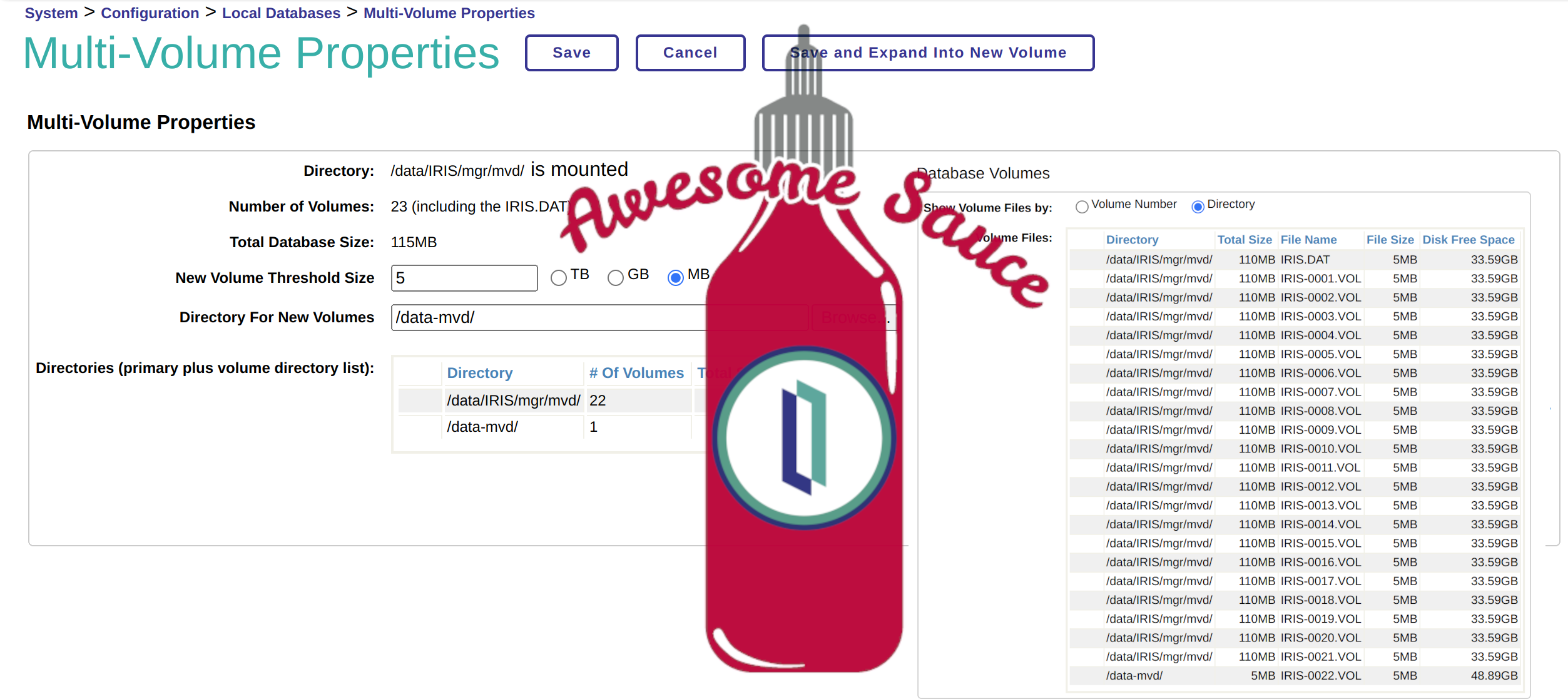
Multi-volume Database... Awesome Sauce!
Managing massive databases often involves wrestling with file system limits, disk space fragmentation, and complex storage migration. InterSystems IRIS introduces a powerful solution: Multi-volume Databases. This feature allows a single logical database to be comprised of multiple physical files, offering a level of flexibility that is truly “awesome sauce.”
The Problem: Single-File Limitations
Historically, a database was a single physical file. As data grows, this file can hit OS limits or become difficult to manage across physical disks. Moving a multi-terabyte file is a high-stakes operation that often requires significant downtime.

The Solution: Multi-volume
With multi-volume support, you can define a database that starts with one file and expands into others as needed. These volumes can live on different physical disks or mount points, allowing you to scale storage horizontally without changing your application code or namespace configuration.
Benefits at Scale
- Bypass File System Limits: Stay well within the limits of your underlying storage layer by distributing data across multiple files.
- Easier Migrations: Add a new volume on a new disk, and let IRIS automatically begin using it. You can eventually phase out older volumes.
- Performance Tuning: Distribute volumes across different types of storage (e.g., SSD for active data, HDD for archives) if configured correctly.
Implementation in IRIS
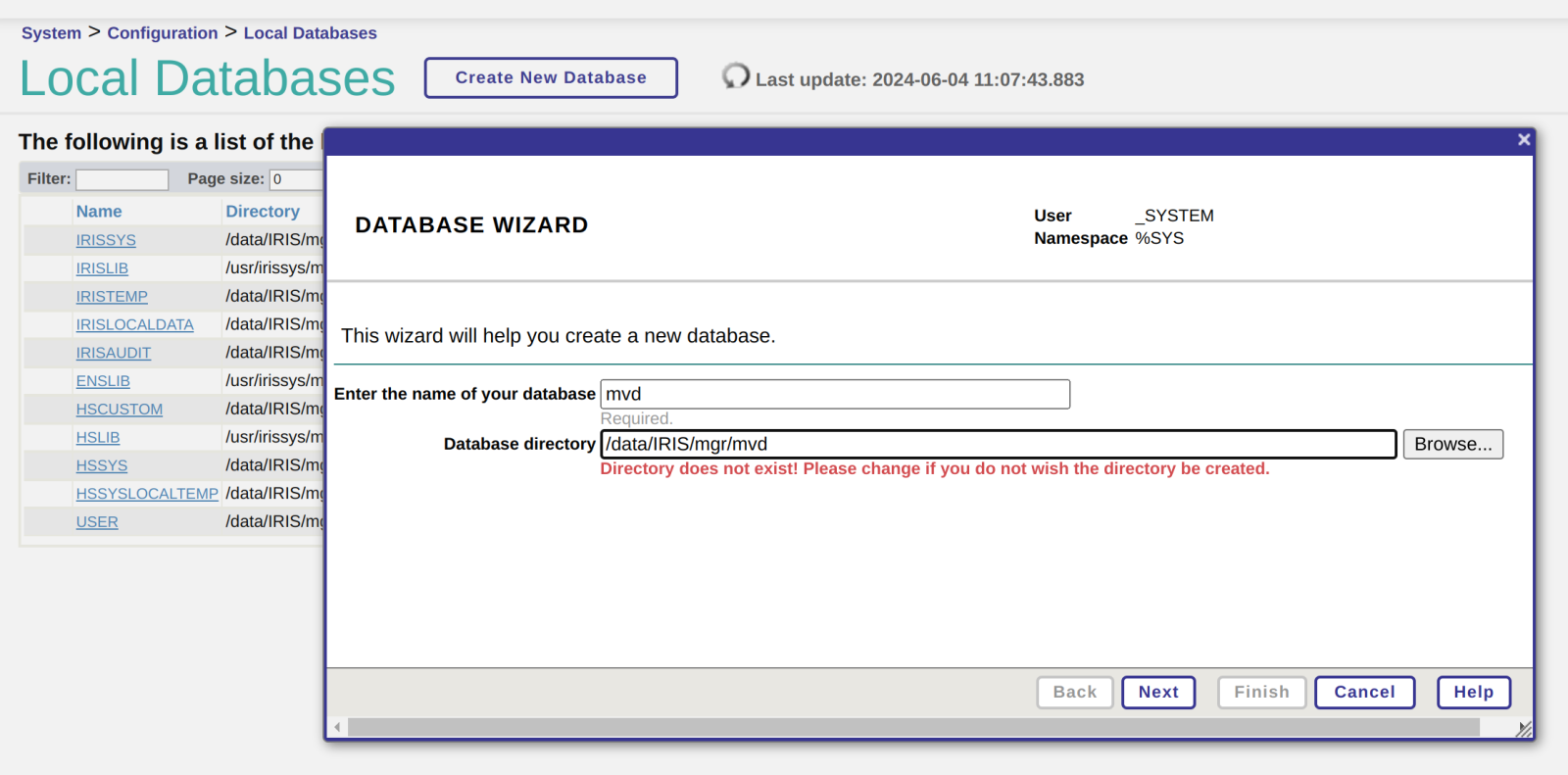
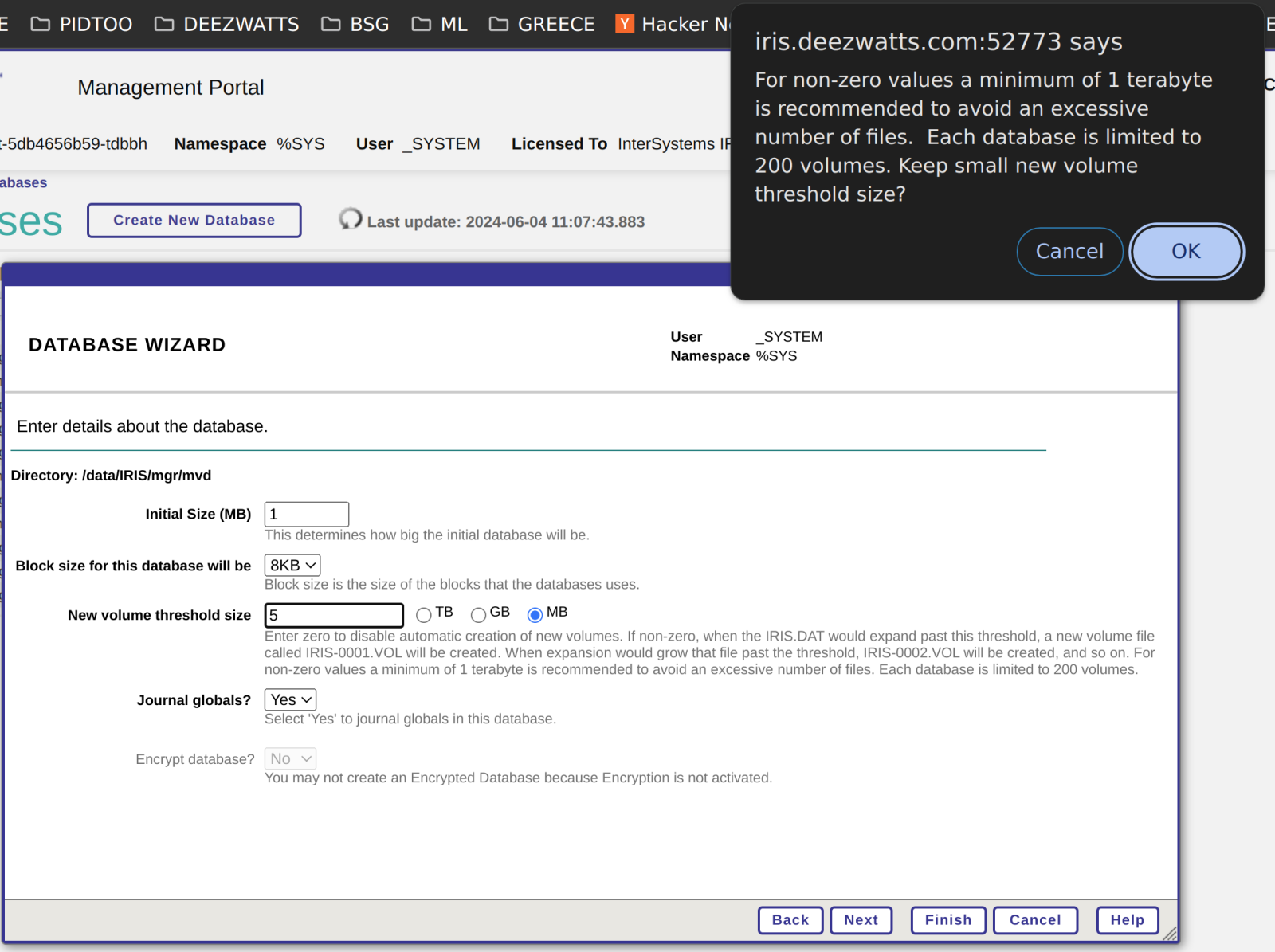
Setting up multi-volume is straightforward within the Management Portal. You define the primary volume and then add secondary volumes as the data demands.
.png)
Under the Hood: Integrity and Backup
Even though the data is physically split, IRIS treats the multi-volume set as a single logical unit. Integrity checks and backups are aware of the volume structure, ensuring that your data remains consistent and protected across the entire set.
.png)
Conclusion
Multi-volume databases are a game-changer for high-growth InterSystems IRIS environments. By decoupling the logical database from a single physical file, you gain the scalability and administrative flexibility needed to manage modern, data-intensive workloads.
It’s storage management with a side of awesome sauce!